
The TwinStream also offers the possibility to jet via a catheter. Four variants are available. Some of these are also laser-resistant and are used if lasering is performed during the procedure.
Below is an overview of the different types of catheters.
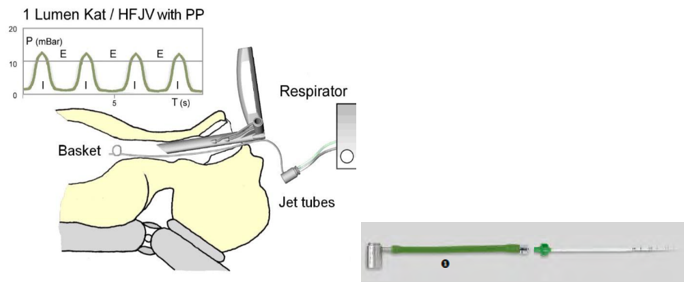
The 1-lumen catheter
This allows you to apply basic jet ventilation. The pause pressure during ventilation is measured to prevent excessive pressure and reduce the risk of barotrauma. A laser-resistant and non-laser-resistant version are available. There is also a choice in terms of diameter and length, including a pediatric version.
The 2-lumen catheter
With this variant, only basic jet ventilation is possible. In addition to measuring the pause pressure, you can also measure the FiO2. When using jet frequencies lower than 100 bpm, measuring CO2 is also possible. There are two versions of this double-lumen catheter, both laser-resistant.

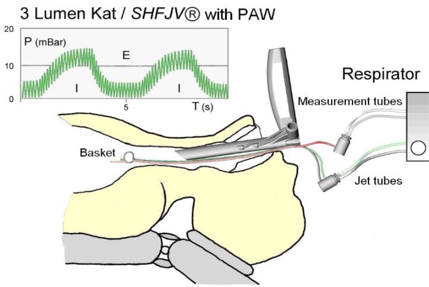
The 3-lumen catheter
With this catheter, you can apply Bi-level jet ventilation (SHFJV). There is one version available, which is not laser-resistant. During ventilation, the airway pressures are monitored.
The 4-lumen catheter
This variant is available in two lengths, both non-laser-resistant. It allows you to apply SHFJV and, in addition to airway pressure, also monitor gas values (FiO2 and possibly CO2).

A complete overview of the various infraglottic jet catheters:

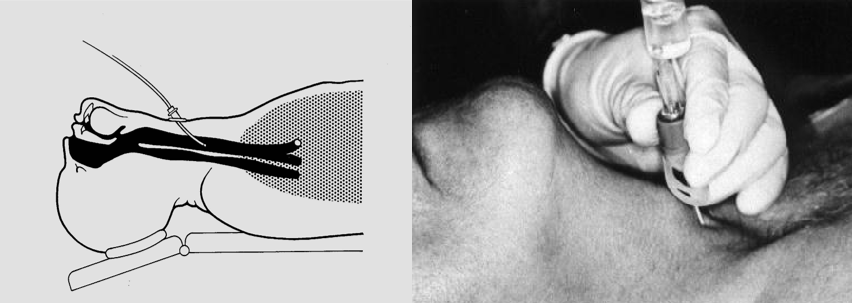
Ravussin needle
For emergency situations, you can apply basic jet ventilation via the Ravussin needle. The pause pressure is measured to prevent barotrauma. The needle is placed transcutaneously into the trachea just below the cricoid.
Read more about the applications of the TwinStream here.
