
Estimated reading time: 5 minutes
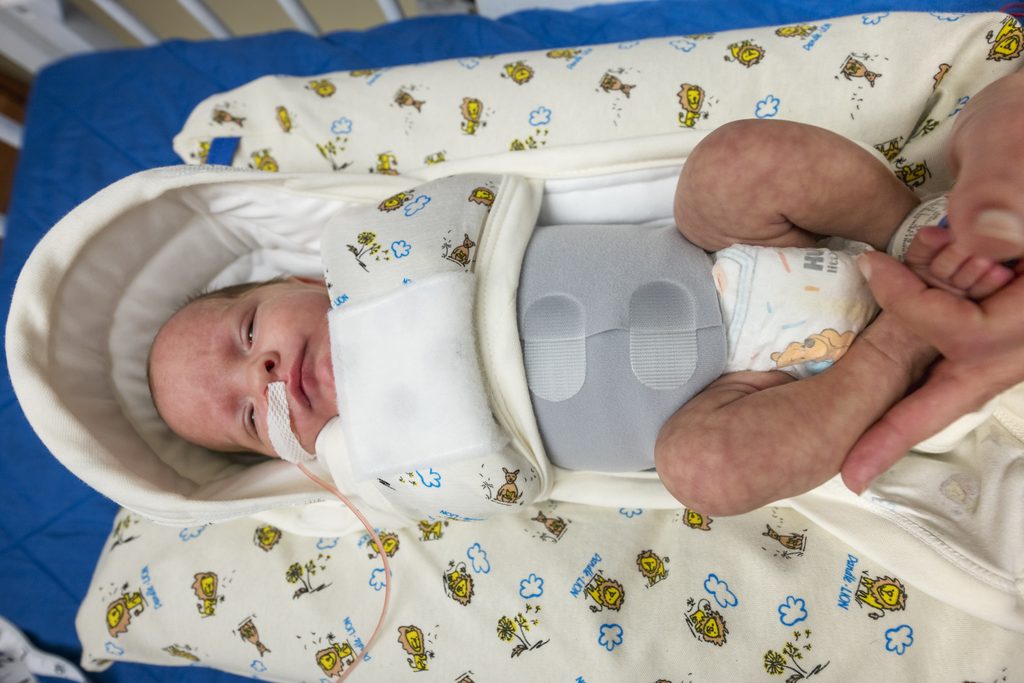
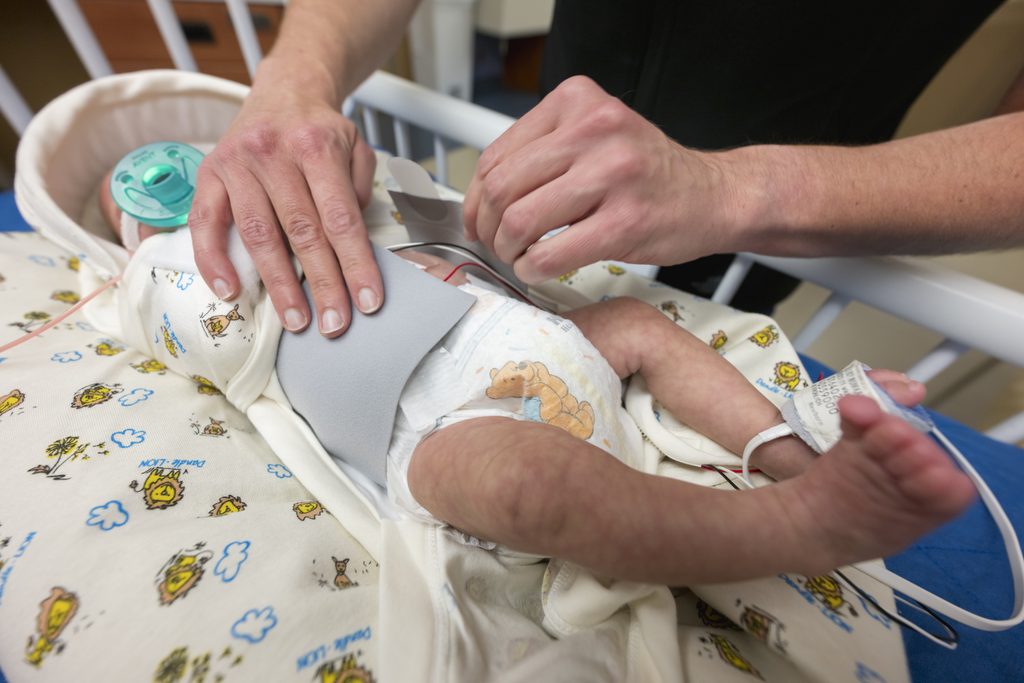
A so-called CPAP belly frequently occurs in premature infants in the NICU. This distended abdomen can put additional pressure on the delicate balance between breathing, comfort, and abdominal function. The NeoBellyBand™ supports the abdominal wall when it provides insufficient stability due to prematurity, gas distension, or anatomical abnormalities.
Why is abdominal wall support important?
The abdominal wall is more than just a muscle layer around the abdomen. It plays an essential role in breathing and the coordination between the rib cage and the diaphragm. The abdominal wall also contributes to gastrointestinal function, posture, motor development, and the overall stability of the body.
When the abdomen becomes severely distended due to gas formation or when the abdominal muscles are still insufficiently developed due to extreme prematurity, this natural support decreases. This affects respiratory mechanics and reduces the newborn’s comfort. The NeoBellyBand™ was developed to provide light, uniform support in these situations without restricting the baby’s natural movements.
Developed by a neonatal physical therapist
The NeoBellyBand™ was designed by Ginny McGill (PT, DPT, CNT, NTMTC), an experienced neonatal physical therapist from the United States. In her daily practice, she saw the need for a safe, comfortable way to support the abdominal muscles of vulnerable neonates.
The development is based on anatomical and physiological principles of abdominal wall function. An initial clinical publication supports the use of the band and describes two case studies and a literature review.
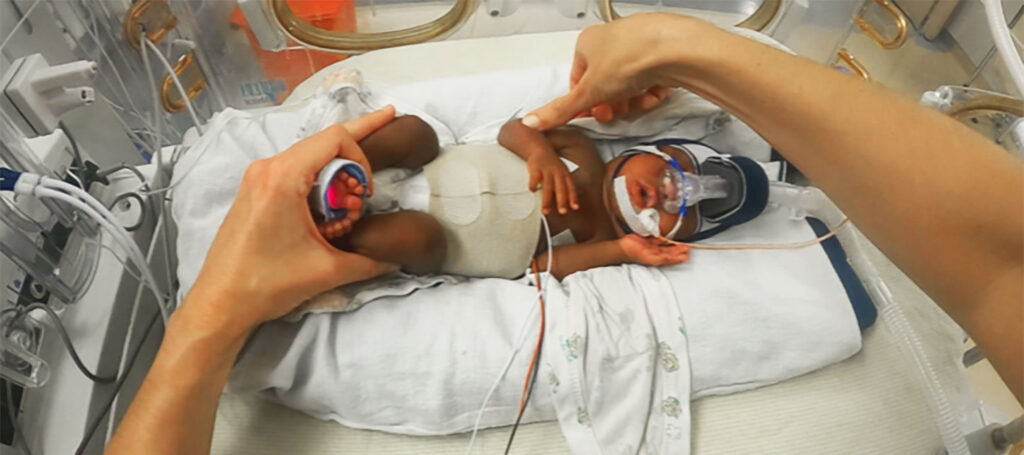
Initial experiences are promising. In a published case report, neonatal physical therapist Ginny McGill describes a newborn with severe CPAP-related abdominal distension. Within two days of starting the use of the NeoBellyBand™, the abdominal distension clearly decreased (McGill, 2022). These initial results suggest that abdominal wall support can be a valuable addition to neonatal care.
Designed for the smallest patients
Safety and ease of use were central to the development. For instance, the NeoBellyBand™ consists of a soft medical-grade foam inlay that:
- is lightweight
- is breathable and moisture-regulating
- fits comfortably on the body
- is suitable for the sensitive skin of premature infants
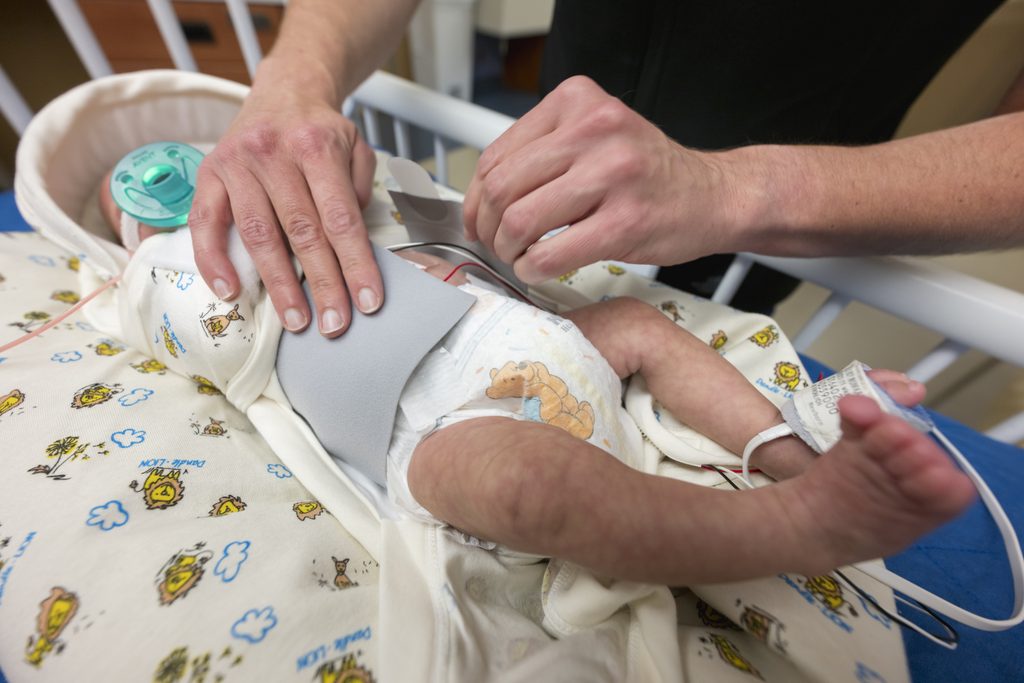
With the adjustable outer layer with Velcro, you can easily adapt the support to the size of the baby and different care moments. All materials are completely latex- and neoprene-free and tested for use on the delicate skin of premature newborns.
Suitable for almost every neonate
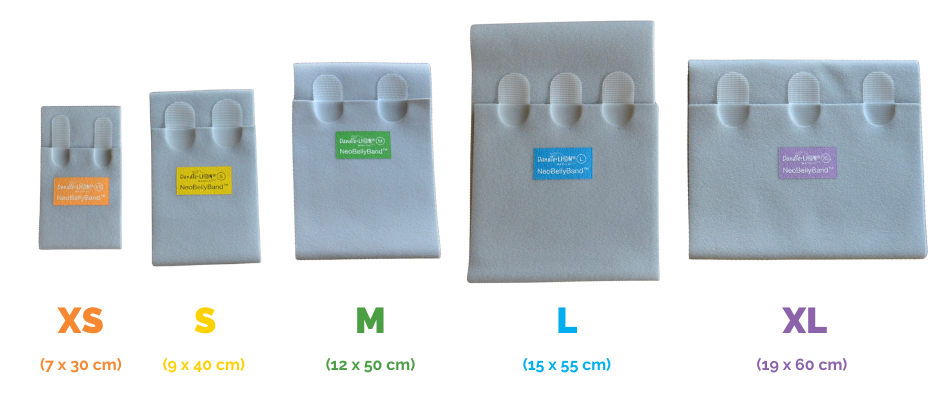
Every baby is unique. That is why the NeoBellyBand™ is available in five sizes (XS to XL). Within each size, the band can be further adjusted for an optimal fit.
The band is intended for single patient use. During admission, the band can be hand-washed and reused for the same patient. The band is supplied in pairs.
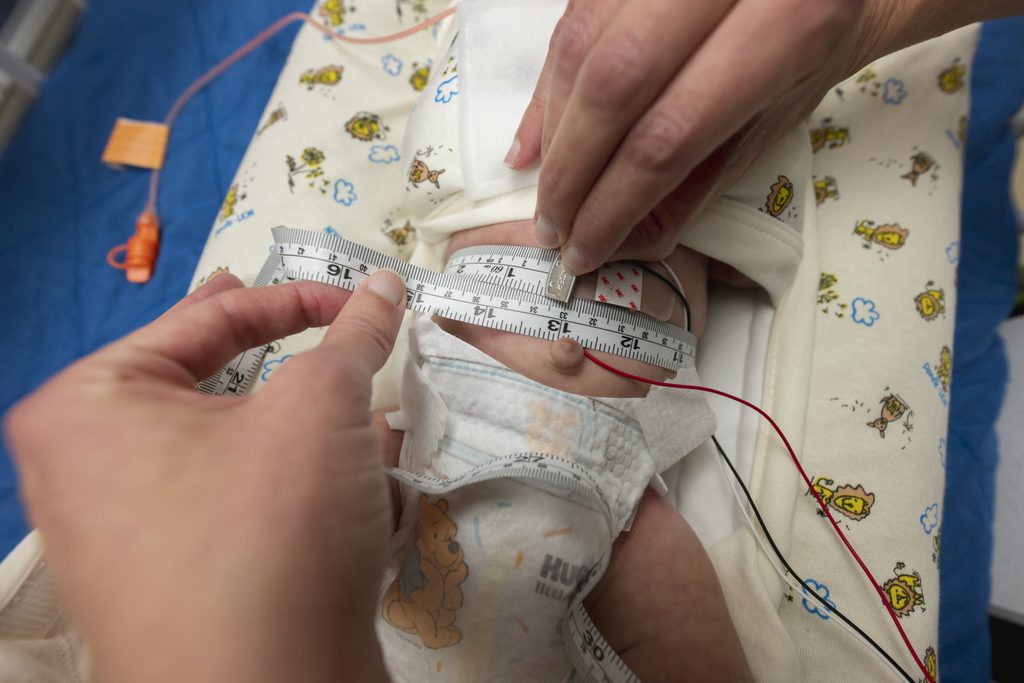
Key features of the NeoBellyBand™
- Supports abdominal wall function in prematurity, abdominal distension, and nCPAP
- Lightweight, breathable, and moisture-regulating design
- Medical-grade materials, tested for use on the skin of premature infants
- Latex- and neoprene-free
- Adjustable for an optimal fit
- Available in five sizes (XS to XL)
- Single patient use; hand-washable and reusable for the same patient
Caring for the smallest patients requires solutions that align with daily practice in the NICU. The NeoBellyBand™ was developed from that practice: a tool for healthcare professionals in the treatment of vulnerable neonates who require additional abdominal wall support.
Want to know more?
Would you like to know more about the NeoBellyBand™? View our product page with product flyer or consult the comprehensive Pictorial Guide with step-by-step instructions for applying the abdominal band. An instructional video is also available to quickly familiarize healthcare professionals with the use of the NeoBellyBand™. For more information, please contact Irma Damhuis or schedule an appointment.
Sources:
McGill, V. (2022). Neonatal abdominal support to address CPAP Belly: Two cases report and literature review. Journal of Neonatal-Perinatal Medicine, 831–836. doi:10.3233/NPM-221047.
