
Estimated reading time: 4 minutes
In discussions about double-lumen tubes (DLTs), we regularly hear the same reaction: “A silicone DLT? That is far too flimsy. Surely that doesn’t work well?”
That reaction is understandable. Many anesthesiologists have been working with the stiffer PVC DLT for years. It feels familiar during placement and provides a sense of control. However, a stiffer tube does not automatically perform better.
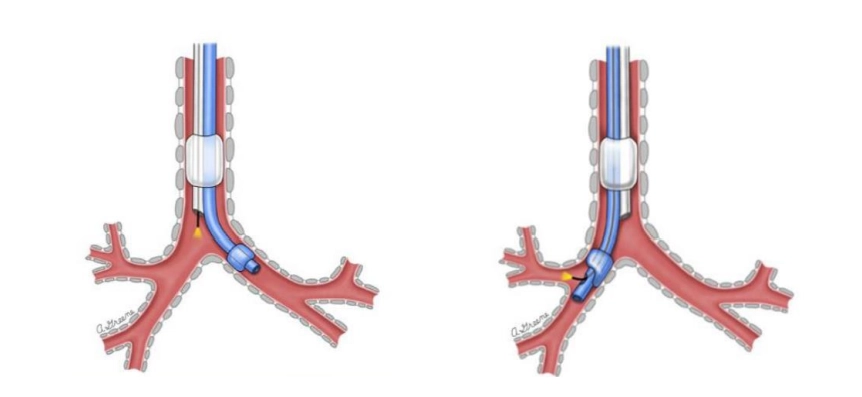
The differences between a PVC and silicone DLT
A PVC DLT is naturally stiffer and therefore easily retains its shape during intubation and positioning.
For users who have worked with PVC for years, this feels familiar. However, a stiffer tube is not necessarily the best choice for the patient. Due to the larger outer diameter compared to a standard endotracheal tube, a DLT can significantly strain the airway during placement and the procedure. It is precisely then that the material of the tube can make the difference.
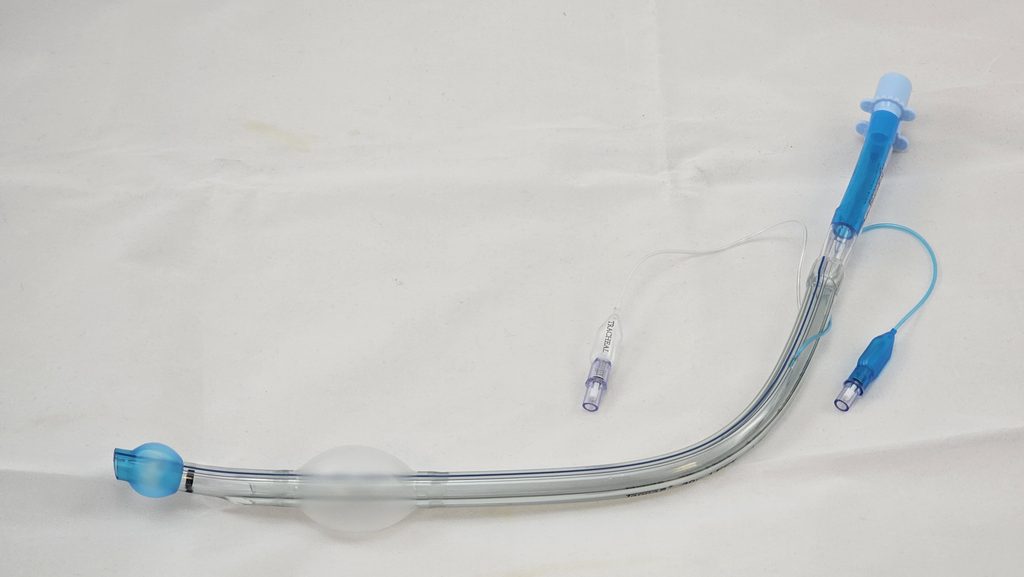
Silicone is softer and more flexible than PVC. As a result, the tube adapts better to the patient’s anatomy and exerts less pressure on delicate structures in the airway. This applies both during intubation and during long-term thoracic procedures.
In a randomized study, silicone DLTs were directly compared with PVC DLTs. Patients with a silicone DLT reported significantly less postoperative throat pain. Their symptoms were also less severe.1
This is relevant: postoperative throat pain, hoarseness, and swallowing difficulties are among the most common discomforts after a thoracic procedure with a double-lumen tube. A recent review study therefore cites the silicone DLT as an effective, non-pharmacological strategy to reduce these complaints.1
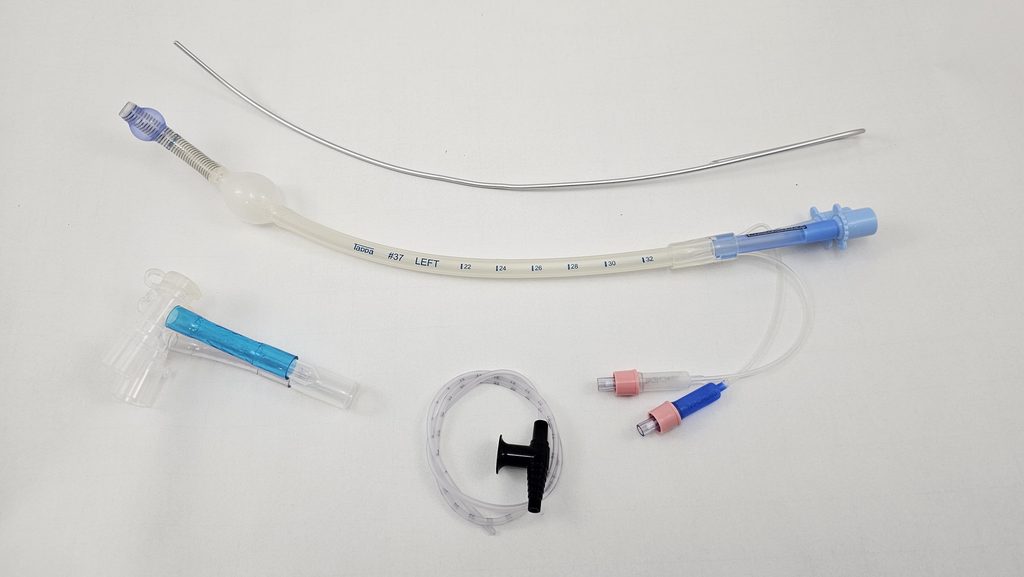
Placing a silicone DLT
Various studies show that modern silicone DLTs are no more difficult to place than PVC variants. During fiber-optic intubation, a silicone DLT even proved easier to slide over the bronchoscope than a PVC DLT. It also caused less mucosal damage.
Flexibility, therefore, does not have to come at the expense of control. Modern silicone DLTs combine a soft tube with sufficient structural support for controlled positioning.
The Tappa silicone DLT combines the benefits of silicone with the properties you need as an anesthesiologist in practice. The tube offers:
- A soft silicone construction for increased patient comfort
- A steel wire-reinforced tip that helps prevent kinking during positioning
- A high volume, low pressure silicone cuff
- A blue cuff for clear identification of the bronchial side during fiber-optic verification
- Left- and right-sided versions in various sizes
In this way, this patient-friendly DLT meets the requirements of daily practice in the operating room.
Habit and previous experiences often play a role in the choice of a DLT. Nevertheless, clinical studies and practical experience show that modern silicone DLTs are a serious alternative to the traditional PVC variant.
The question is therefore no longer: “Is a silicone DLT not too flimsy?” The question is whether a softer tube can offer your patient a more comfortable recovery, without compromising on control or ease of use. For many anesthesia teams, the answer is now surprisingly positive.
Want to know more?
Curious about the benefits of a Tappa Silicone DLT for your practice? We supply both PVC and silicone double-lumen tubes from Tappa Medical. For more information, please feel free to contact Carola van Dijk or visit our website.
Sources:
1 Jeon, J., Lee, K., Ahn, G., Lee, J., & Hwang, W. (2014). Comparison of Postoperative Sore Throat and Hoarseness Between Two Types of Double-Lumen Endobronchial Tubes: A Randomized Controlled Trial. Journal Of Cardiothoracic And Vascular Anesthesia, 29(1), 121–125. https://doi.org/10.1053/j.jvca.2014.05.028
