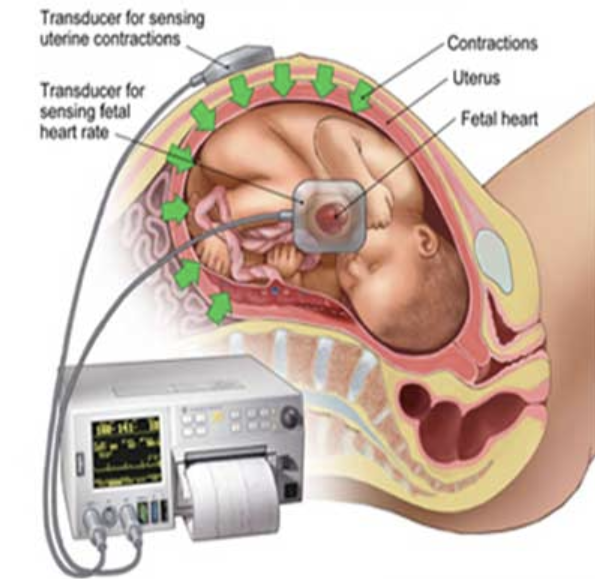
In week five, a fetus’s heart begins to beat, from 155 to 195 beats per minute before birth. The strength and number of beats can be measured by an electronic fetal monitor to determine if a fetus is in distress. It is therefore very important to test whether the monitor indicates the correct values.
The PS320 is back in Fluke Biomedical’s product range. We also have the Mechanical Fetal Heart (MFH) in our range, which works in combination with Fluke equipment. What are the differences? What are the similarities? Which one best suits your work? Read on below.
Similarities
Both the PS320 and the MFH simulate a fetal ECG. This allows you to test whether your cardiotocography (CTG) transducer is working properly. Both simulators work standalone and are also very user-friendly.
Differences
But what are the differences between the MFH and the PS320?
With MFH you simulate purely and simply the CTG, the transducer for the fetal heart rate. You connect this to one of the patient simulators, such as the ProSim family.
The PS320 can do much more. You do not connect the PS320 to a ProSim, it simulates itself. In addition to the fetal heart rate, the PS320 can also mimic the mother’s heart rate. The PS320 can also mimic uterine activity. With the PS320 you simulate all the functions of a CTG monitor.
It is important to consider what you exactly want to simulate when purchasing. If you want to test the uterine pressure transducers (TOCO), then the PS320 is necessary.

Contact
Would you like to know more about which of the two best suits your work? Please contact us. We are happy to think along with you. It is also possible to request a trial placement to try out both.