
As you know, medical X-ray equipment is an essential component in the process of imaging technology within hospitals. This equipment is intensively checked and maintained. Measurements and checks are performed daily to ensure that the imaging equipment is in good condition.
One of these essential devices is the CT scanner. One of the measurements that must be performed on the CT scanner to ensure quality and safety is a CTDI measurement. The CTDI measurement can be performed with the RaySafe X2 CT sensor. A phantom is required for this. A CTDI measurement assesses the amount of radiation a patient is exposed to.
The CTDI phantom is made of polymethyl methacrylate (PMMA) with a density of 1.19 g/cm³. It is available in various sizes. For example, there are CTDI phantoms that mimic an adult body, adult head, pediatric body, and pediatric head.

The dimensions of these are:
- Adult body: 150 mm cylinder, 320 mm diameter
- Adult head/pediatric body: 150 mm cylinder, 160 mm diameter
- Pediatric head: 150 mm cylinder, 100 mm diameter
The holes in these phantoms correspond exactly to the size of the RaySafe X2 CT sensor. The phantom is also equipped with engraved cross markings for correct positioning. For the remaining holes in the phantoms, you can seal them with acrylic rods. This ensures an accurate measurement.
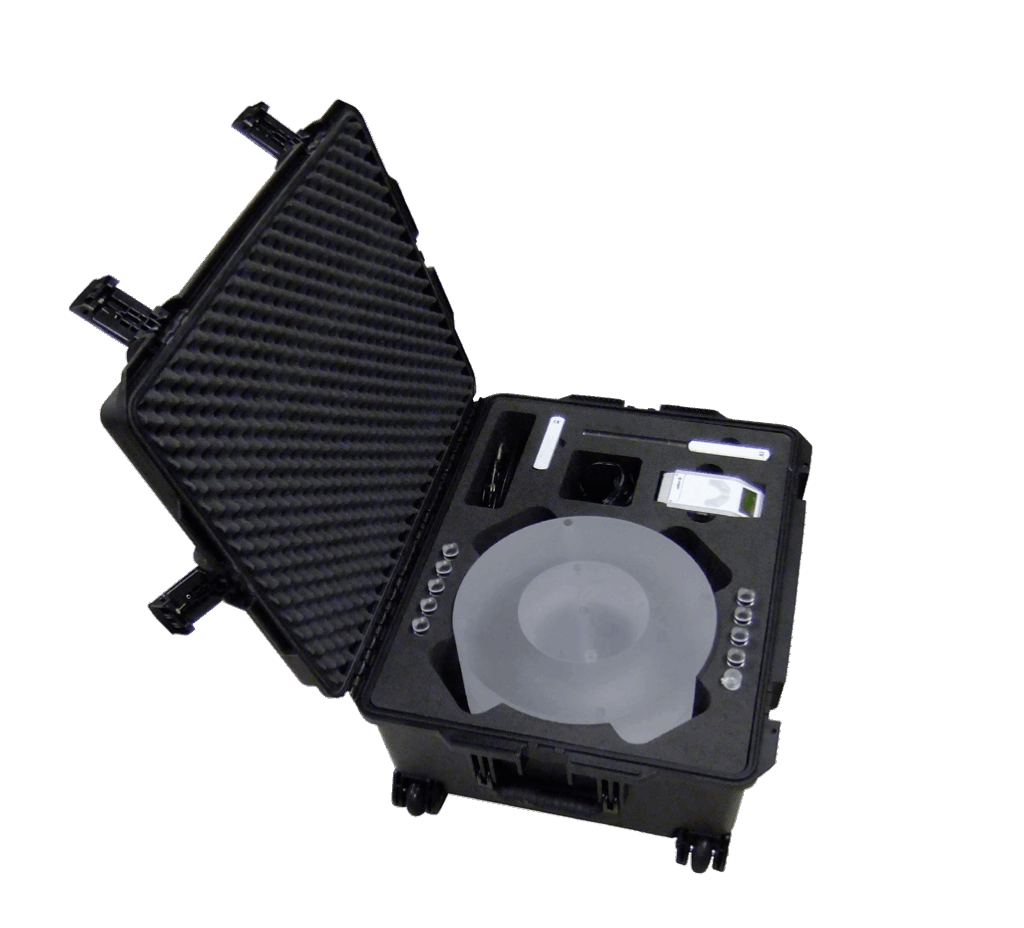
The CTDI phantoms comply with IEC 61223-3-5 and IEC 61223-2-6. The CTDI phantoms are available in two versions. The Pro-CT Dose X2 contains all the above-mentioned phantoms. The CTDI RaySafe X2 contains the adult phantoms. Both versions are supplied in a rolling case so that you can store and transport the phantoms easily and safely. This case also has room for the RaySafe X2 and a number of sensors.
