
Introduction
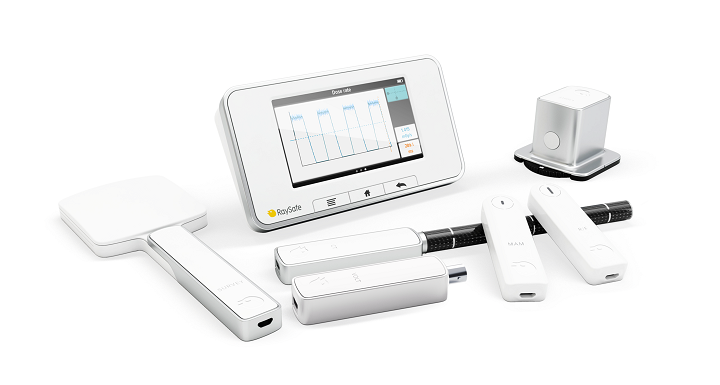
In addition to all the other sensors, there is now also the Volt sensor. This is the sixth sensor and seventh measurement option of the RaySafe X2. The RaySafe X2 Volt sensor is used to measure the voltage of the voltage output of X-ray equipment. Previously, an oscilloscope was required for this measurement, but now only the Volt sensor and the X2 base unit are needed.
The excellent interface makes it easy to perform measurements, and the waveforms are immediately visible. For faster data analysis, built-in conversion factors can be selected on the base unit to calculate and display the corresponding kV or mA/mAs.
Connection
All sensors of the RaySafe X2 start and stop automatically. It is important to know that with the Volt sensor, the measurement must be started and stopped manually. This can be easily done by pressing start and stop in the bottom right corner of the touchscreen.
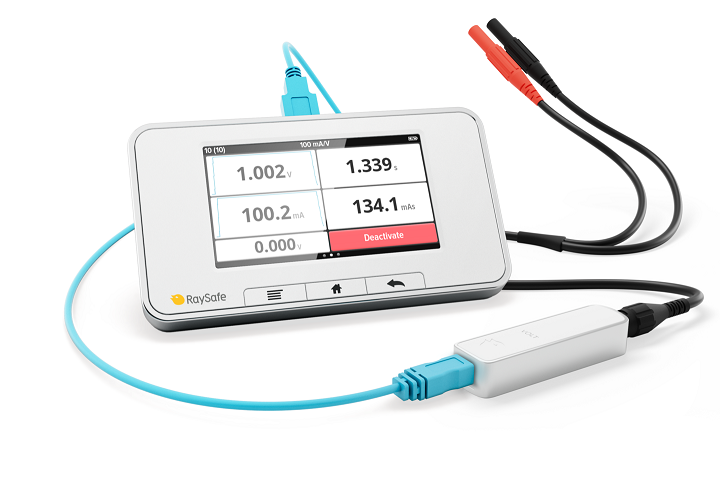
Connect the sensor to the base unit with the USB cable. Connect the end of the sensor to the voltage output of the device with the supplied cable.
Good to Know
The end of the sensor is a BNC connection point. The voltage is calculated as an average of all measurements from the first time the signal exceeds 50% until the last time it drops below 50%. The time starts the first time the signal exceeds 50% and ends the last time it drops below 50%.
Did You Know?
The X2 Volt sensor can also be used to connect other measuring devices that supply a voltage signal between ± 16 V, such as an mAs clamp for non-invasive mAs measurements.
