
Transcutaneous bilirubin measurement in all newborns before discharge: to measure is to know.
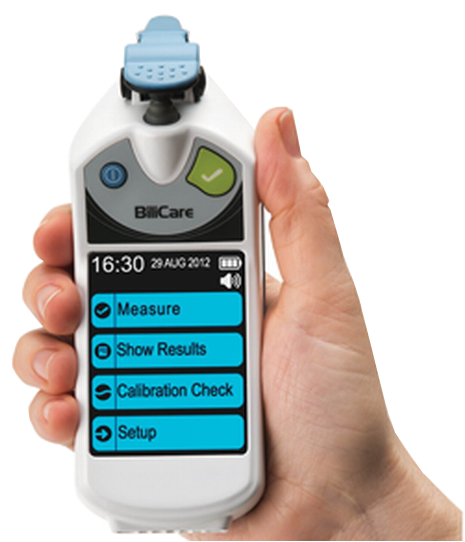
Transcutaneous bilirubin measurement has been increasing in maternity care for years. This is to reduce bilirubin determinations via blood. According to research, screening newborns for hyperbilirubinemia with a transcutaneous bilirubin meter can avoid 73% of blood draws (2010, “Transcutane bilirubinemeting bij pasgeborenen” C.R.W. Korver). Currently, transcutaneous measurement is applied when the nurse observes signs of jaundice. Is it now time to measure transcutaneous bilirubin preventively in all newborns before discharge?
Objective approach
The “yellowing” of a newborn is interpreted differently by different people. Observation with the naked eye is therefore subjective. Transcutaneous bilirubin measurement ensures an accurate measurement of the bilirubin level. This makes the measurement objective. The measurement also ensures that there is a basic measurement that can be used as a reference in later developments of the newborn. This value can also be communicated to the midwife for completeness. To measure is to know.
Exclusion of exceptions
Transcutaneous bilirubin measurement is relatively simple and patient-friendly. By performing this measurement on all newborns, you prevent exceptional cases from falling outside the observations. As far as possible, you exclude the possibility that patients may develop hyperbilirubinemia unnoticed and still have to return to the hospital later.
Should standardized transcutaneous bilirubin measurement be part of basic newborn care? Yes!
This measures the bilirubin level in all newborns in an objective manner and excludes the possibility of newborns falling outside the observations.
